
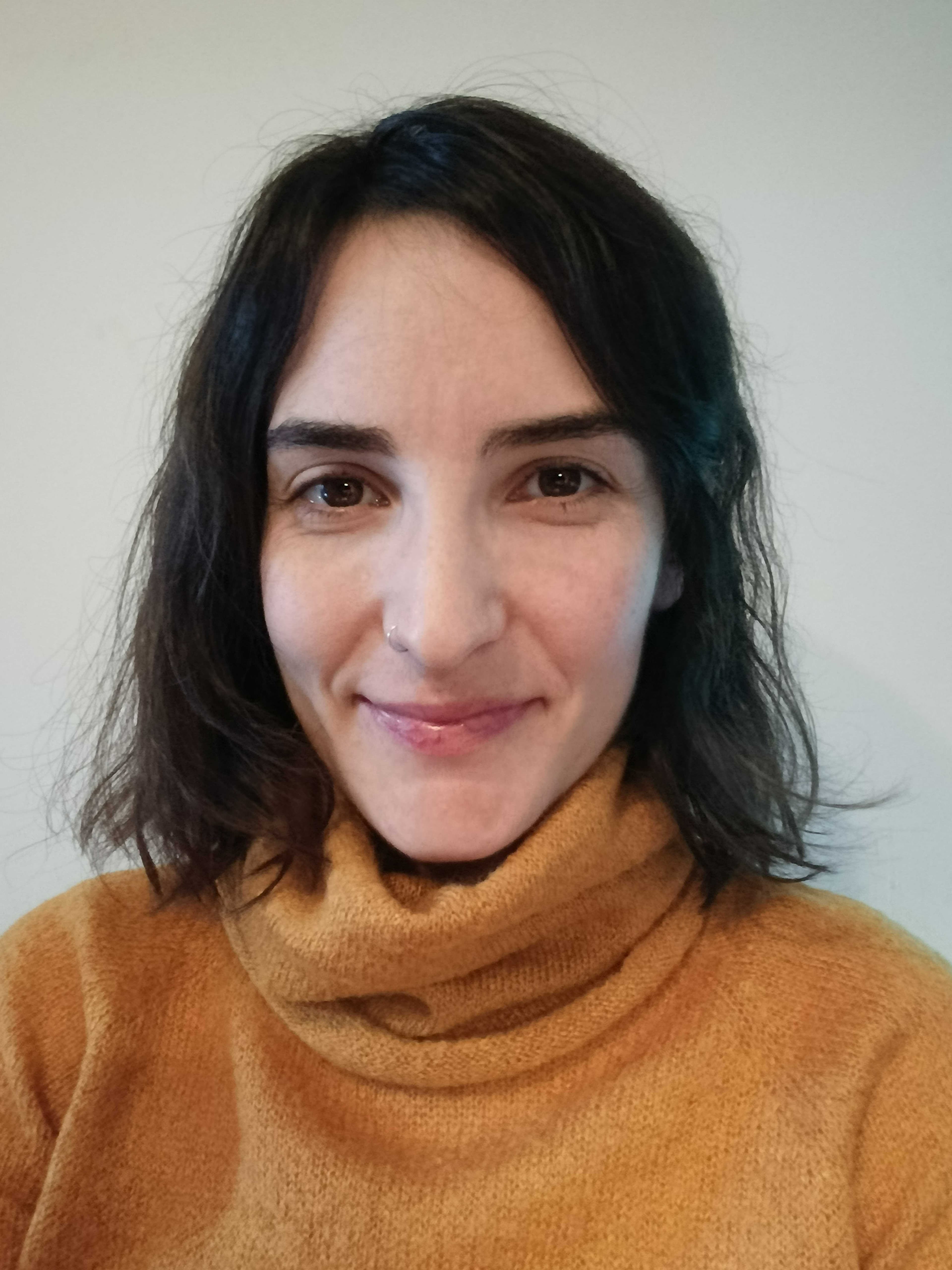
Mónica Expósito Granados
Postdoctoral Researcher
Mónica holds a Bachelor’s degree in Biological Sciences from the University of Extremadura (2011) and a Master’s degree in Genomics and Evolution from the University of Granada (2013). She completed her PhD in Ecology at the University of Granada in 2018 (International Mention) as a predoctoral fellow at the Estación Experimental de Zonas Áridas (EEZA-CSIC, Almería). During her PhD, she carried out two international research stays at the Centre d’Études Biologiques de Chizé (CEBC-CNRS, France), where she received advanced training in physiological ecology, including hormone quantification and laboratory techniques.
Her early research focused on behavioural and evolutionary ecology, particularly the ecology of fear, brood parasitism, and the effects of predation risk and human disturbance on bird behaviour, physiology and reproduction. Building on this foundation, her postdoctoral research progressively expanded towards biodiversity conservation, marine ecology and socio-ecological systems.
In 2019, she joined the Sustainability, Resilience and Governance of Socio-Ecological Systems Group (SOCIECOS, University of Almería), where she contributed to research on human–wildlife coexistence and conservation, including a highly cited synthesis on human–carnivore relations in the American West (Environmental Research Letters, 2019). She subsequently worked on the ECOSER project “Contribution of marine ecosystem services from protected natural areas to human well-being”, assessing how marine ecosystem services delivered by protected areas contribute to human well-being and management, and strengthening her expertise in mixed-method approaches that combine ecological information with stakeholder-based assessments.
From 2022 to 2024, she contributed to applied conservation initiatives and science–society engagement in marine contexts, including the EU LIFE SeaBiL project “Saving Seabirds from Marine Litter” at the University of Cádiz. This work focused on marine litter and seabird conservation, with particular emphasis on plastic pollution and the use of seabirds as sentinels of environmental change within collaborative, multi-actor project settings.
In parallel, she is actively engaged in science communication and public outreach, participating in environmental education activities, citizen-focused events and dissemination actions related to biodiversity conservation, marine litter and human–nature relationships.
Currently, her research focuses on marine litter, conservation conflicts and the human dimensions of conservation, aiming to integrate ecological evidence with social perspectives to support more effective biodiversity conservation strategies. Since September 2025, she has been working as a postdoctoral researcher on the Biodiversa+ project emBrace “Reconciling Food Systems Sustainability and Biodiversity Conservation in Multifunctional Protected Landscapes” at the University of Almería. In this project, she supports the Spanish case study through the development and implementation of participatory and mixed-methods research, contributing to the understanding of social–ecological dynamics in multifunctional protected landscapes and to identifying pathways that reconcile biodiversity conservation with sustainable food systems.
Publications
The Albuferas de Adra in crisis: a comprehensive review demanding urgent conservation action
2026 – Ecosistemas
Valuing ecosystem services of freshwater mussels and fish
2025 – HUMAN DIMENSIONS OF WILDLIFE
Avanzando sobre el cómo, el dónde y el por qué de los problemas del agua en ambientes semiáridos: los servicios de los ecosistemas como aproximación
2013 – Eubacteria